Blog
DJ Lights Buyer’s Guide: How to Choose the Right DJ Lights for Your Gigs
Nov
Shopping for DJ lights can feel like walking into a club with your eyes closed: beams, lasers, washes, bee eyes, DMX channels, GOBOs… where do you even start? We’ve been lighting dance floors at weddings, quinceañeras, school dances and backyard parties for years, so we put together the buyer’s guide we wish we’d had when we started. By the end, you’ll know exactly which DJ lights fit your gigs, your room sizes and your style.
Start With the Rooms You Actually Play
Before you look at a single spec sheet, think about where you perform most. A living-room birthday party, a 150-guest wedding hall and an outdoor festival stage need very different rigs.
- Small rooms and house parties: compact, sound-active party lights and mini moving heads give you plenty of color and motion without blinding anyone.
- Banquet halls and weddings: a pair of moving heads plus a laser or wash light fills the dance floor and the ceiling and makes the room feel like a club.
- Big venues and stages: multi-arm moving heads, high-output beams and animation lasers cut through haze and reach the back of the room.
Buy for the gigs you book 80% of the time, not the one dream gig a year. You can always add a fixture later.
Know the Main Types of DJ Lights
Moving Head Lights
Moving heads are the workhorses of a professional rig. They pan, tilt and spin, throwing sharp beams, patterns and color across the whole room. Multi-arm designs pack several effects into one fixture, like RGBW beams, bee-eye zoom heads, lasers and strobes, so one light can do the work of three. Browse our full lineup of moving head DJ lights, from mini heads for small rooms to six-arm show-stoppers.
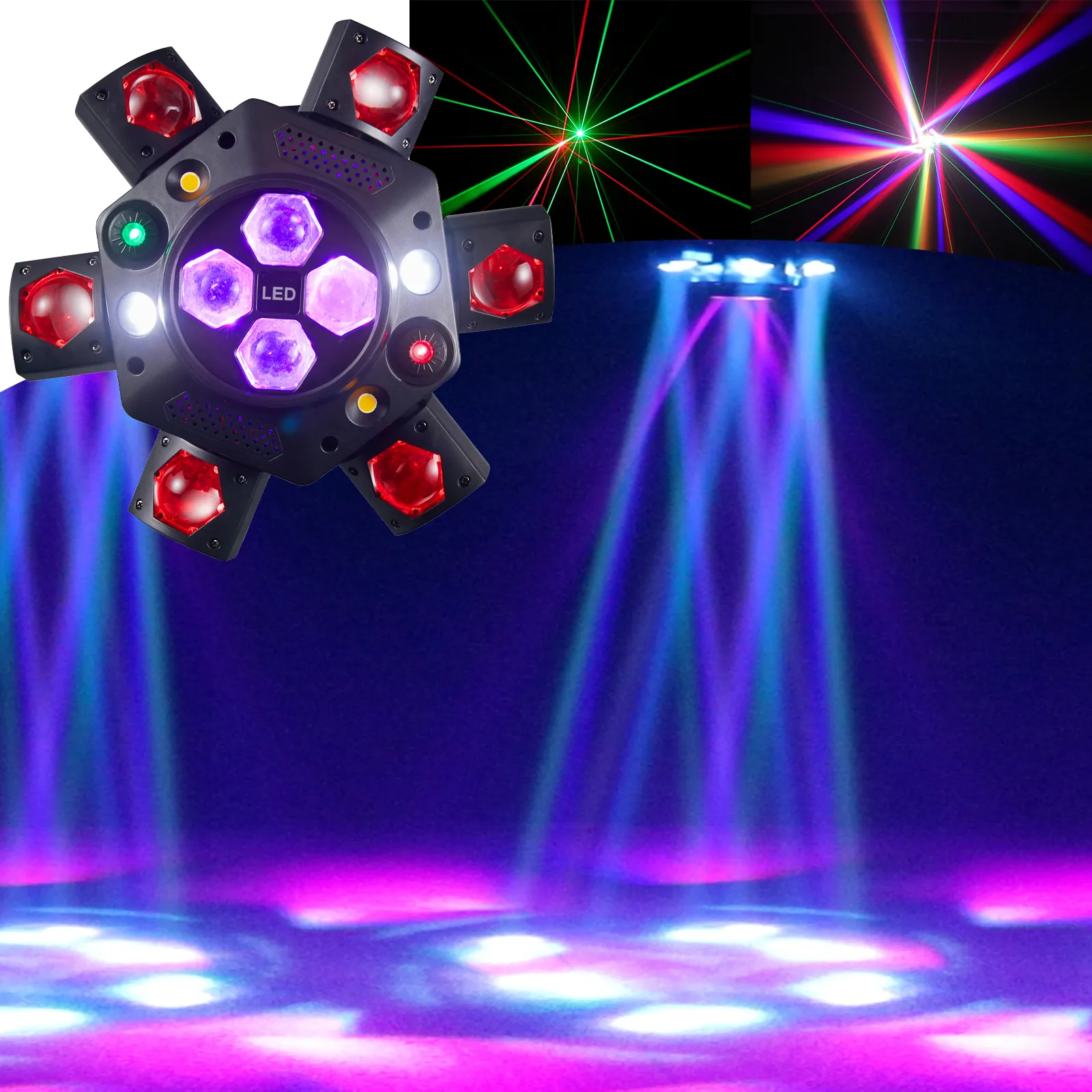
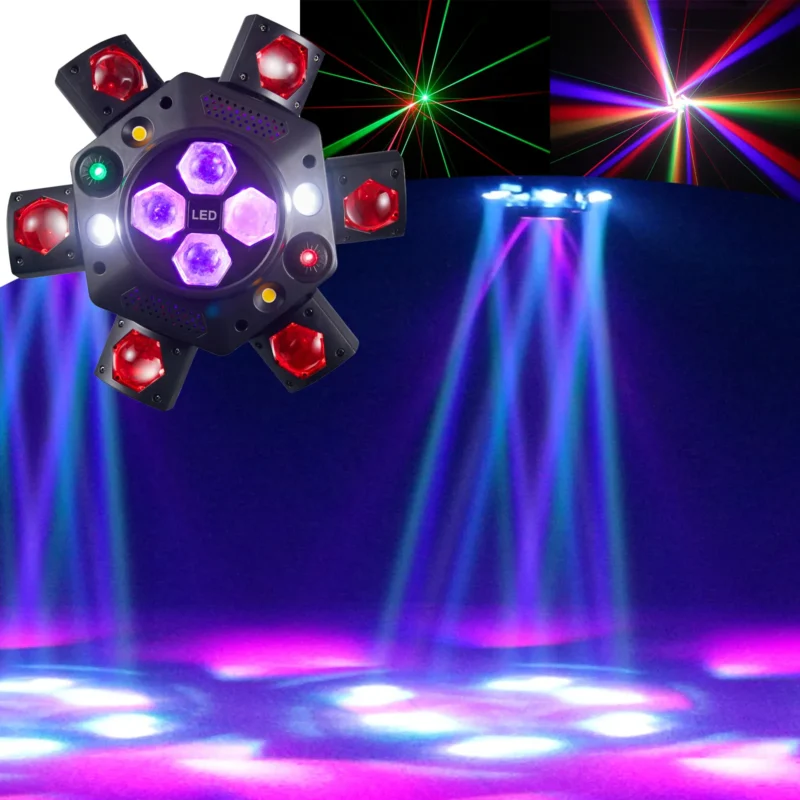
A favorite with our customers is the 150W 6-Arm Moving Head DJ Light. Six arms of beams, bee eyes, lasers and strobes make a wedding dance floor feel like a festival.
Animation Lasers
Nothing gets phones out like a laser show. Animation lasers draw moving shapes, tunnels, text and patterns, and many include sound-active modes, so they react to the beat on their own. With a little haze, the beams look absolutely huge. Check out our animation laser lights for DJs.
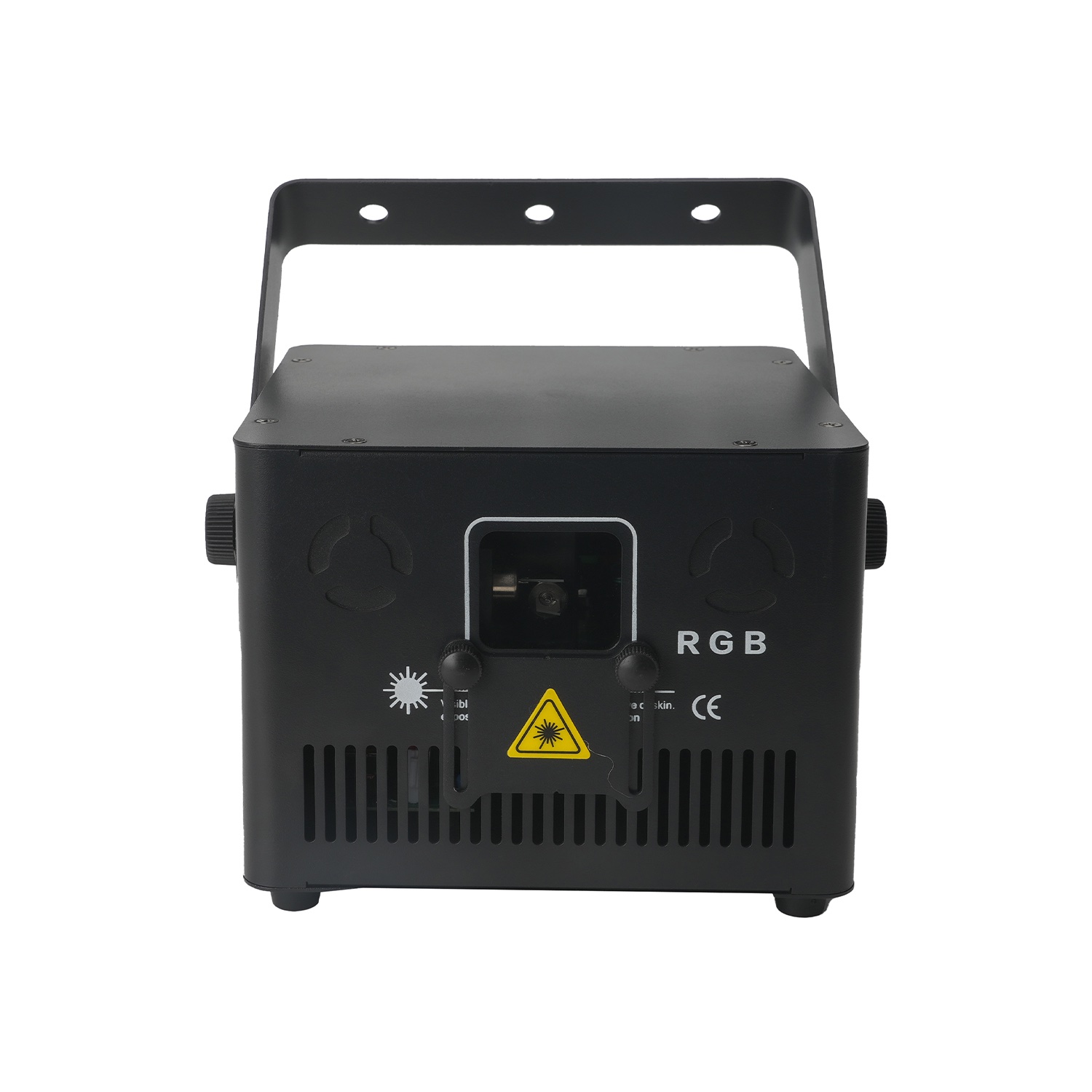
If you want serious punch, the 2W RGB Animation Laser brings a fast scanner, Bluetooth app control and DMX, so it works great as a standalone light or as part of a full rig.
Wash and Bee-Eye Lights
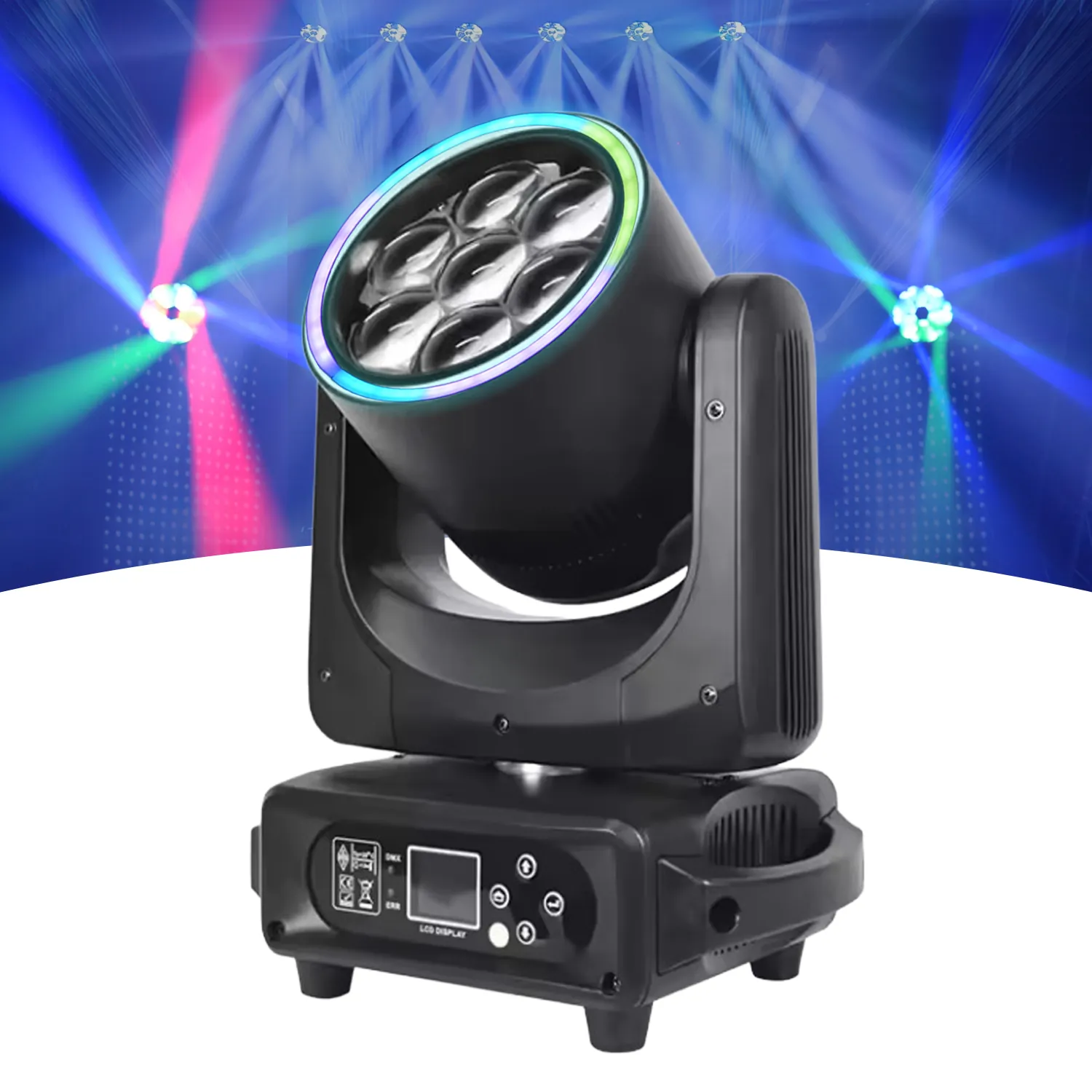
Wash lights flood an area with smooth color. They’re perfect for uplighting walls, coloring a stage or giving the dance floor a mood between high-energy moments. Bee-eye fixtures combine a zoomable wash with tight beam effects and often a strobe ring. The 7x40W Bee Eye Moving Head is a great example of that do-it-all style.
Strobes, Disco Balls and Effects
Strobes add punch on drops and big moments, and magic disco ball lights spray color and patterns everywhere for an instant party feel. Mixing in a strobe and a disco ball light is an easy way to round out your rig.
DMX vs Sound-Active: Which Do You Need?
Sound-active lights listen through a built-in mic and change with the music. Plug them in and they go, which makes them perfect for beginners and fast setups. DMX lets you control every fixture from a controller or software, sync multiple lights together and build custom scenes for first dances, grand entrances and drops.
The good news is that most of our DJ lights do both. Start in sound-active or auto mode today, and when you’re ready to level up, link them with DMX cables and run them as one coordinated show.
Specs That Actually Matter
- Wattage and output: higher wattage generally means brighter beams that reach further, which matters in large rooms and outdoors.
- Effects per fixture: multi-effect lights save space, setup time and cables.
- DMX channels: more channels mean finer control. Simple channel modes are easier for beginners.
- Weight and size: if you load in alone, every pound counts.
- Control options: remotes, apps and auto modes make solo gigs much easier.
Building Your First Rig
A great starter rig for most mobile DJs looks like this: two moving heads on either side of the booth for motion and beams, one laser or effect light in the center for wow factor, and a wash or strobe for mood and drops. Add a fog or haze machine and every beam suddenly looks twice as big. Our fog machines are built for exactly that.
Not sure where to start? Our DJ and stage lighting collection has everything in one place.
Pro tip: the lights look best when the music flows. Our free DJ app at dj.dancepartylights.com suggests your next track by key, BPM and energy, so your mixes stay as smooth as your light show.
Tips to Make Any Rig Look Better
- Use haze. Beams and lasers are almost invisible in clean air.
- Get your lights up high on stands or truss so the beams shoot over the crowd, not into their eyes.
- Match colors to the moment: warm tones for dinner, full color chaos for peak hour.
- Always follow laser safety guidelines and never aim lasers at the audience’s eye level.
FAQ
What are the best DJ lights for beginners?
Sound-active multi-effect lights and mini moving heads. They work out of the box, cover a lot of space, and grow with you once you learn DMX.
How many DJ lights do I need for a wedding?
Most wedding DJs do great with two moving heads, one laser or effect light and a fog or haze machine. Bigger halls may call for an extra pair of moving heads.
Do I need DMX to use DJ lights?
No. Most of our lights run in sound-active or auto mode. DMX is optional for when you want synced, custom shows.
Are lasers safe for parties?
Yes, when you mount them high and aim them above head height. Always follow the safety guidance in the manual.
Ready to Light Up Your Next Gig?
Whether you’re buying your first party light or upgrading to a full moving head rig, we’ve got you covered. Shop all DJ lights and find the setup that fits your gigs.
Want to see these lights in action? Follow us on Instagram @dancepartylights, TikTok @yourpartylighting, and YouTube Flashback Events for real party footage, setup tips and new drops.
